 logo
logo

Getting your restaurant to the first page of Google doesn’t have to be as difficult as it seems. Sure, there is competition, but what industry doesn’t have competition? Time and time again, marketers and business owners have found ways to rise above their competitors, so why can’t you?
Today we will be outlining 4 steps you can take in 2026 to improve your restaurant’s visibility in Google Search and Maps.
1. Optimize Your Google Business Profile
When it comes to local SEO, nothing is more important than your Google Business Profile (the listing formerly known as Google My Business). Think of your profile as your secondary homepage: it’s the first page that users usually see; therefore, it should be your mission to make it so enticing that they want to click through to learn more.
Be Thorough With The Basics: If Google Asks For It, Fill It Out
Start by filling out everything that’s available to you on the backend: your restaurant’s name, address, and phone number; the type of restaurant you are (Chinese, fast food, pizza), a link to your menu, and a short description of what you offer.
We’re located in Wallingford, CT, so I searched “pizza near me.” The top result is Main Street Pizza in Wallingford. Notice that they labeled themselves a “Pizza restaurant,” and they offer a link to their menu, as well as places where users can order from.
This example also shows us areas that can be improved. Notice the warning that holiday hours might affect the schedule. Setting holiday hours can separate you from the pack.
Boost Click-Through With Images, Videos, & Posts
At its core, SEO is about creating content that searchers want. What do people want from restaurants? Pictures of the food they serve. Upload a gallery of rich images: showcase mouthwatering entrees and appetizers.
While your cuisine should be top of mind, be sure to take pictures of your establishment, and upload them to the “atmosphere” section:
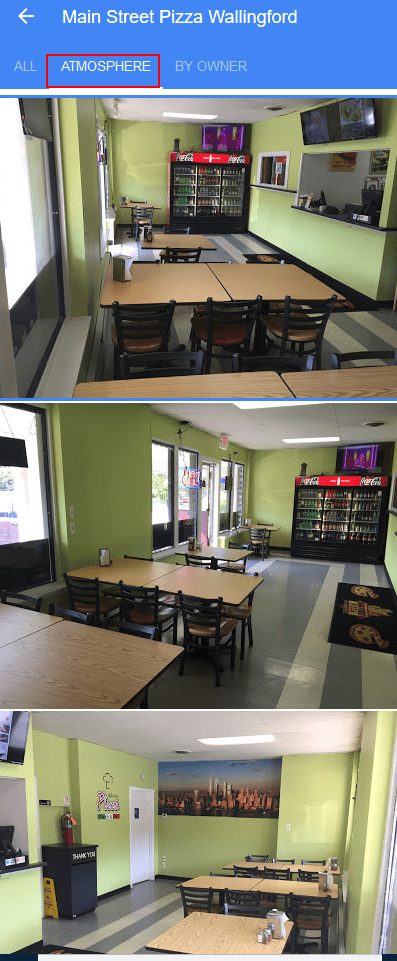
Pictures like this let me know that this isn’t strictly a place for pick-up. These images answer questions like: can I sit down and eat? Is it just a grab-and-go? Is it nice enough for a romantic dinner? Define who you want to be, and state it with pictures like this.
You can also upload short videos to your profile. Google limits video length and file size, so keep clips brief, pick a delicious-looking dish and promote it. If people come to your establishment for the atmosphere, then showcase that instead.
In addition to images and videos, use the updates and offers available in your profile to promote events and specials, and link back to your site with a call to action such as “reserve,” “order,” or “learn more.” For more ideas on what to share, look at what the top restaurants in your area post and borrow the formats that get attention.
2. Build Citations & Maintain a Consistent NAP
Older BrightLocal citation research found that businesses ranking on the first page of Google had dozens of citations. Citations are still a useful part of local SEO, but you do not need that many. In our experience, relevance and consistency matter more than volume. Keyword Performance does build citations, but we focus on the directories that still matter, such as:
● Google Business Profile
● Apple Business Connect
● Bing Places
● Facebook
● Yelp
● Yellow Pages
● MapQuest
● Better Business Bureau
In addition, we recommend all social platforms, like LinkedIn, X (formerly Twitter), and Instagram. Once you’ve created these key listings, hone in on relevant sites, like industry directories and your local chamber of commerce.
The Best Citations For Restaurants
Aside from Google, Apple, Facebook and Yelp, most of the directories above are mainly there to keep your business information consistent. If you’re looking to actually generate leads, then you should focus on:
● Yelp
● TripAdvisor
● OpenTable (if you take reservations)
● DoorDash and Grubhub (if you deliver)
Like GMB, you should take the time to flesh these profiles out with rich content.
To appease the search engines, it is important to make sure that your name, address, and phone number (NAP) is consistent across the board. Search engines are like easily confused customers. If one part of your menu says the steak is $29.95, but another part lists it as $15.95, your customer will start asking questions. Similarly, if I was interested in visiting a burger joint and one person told me it was on Main St., but another person told me it was on South St., then I would be less likely to know where the place is actually located. Search engines think the same way; therefore, it’s best to ensure that your name, address, and phone number is identical across all citations
Be Mindful of Duplicate Listings
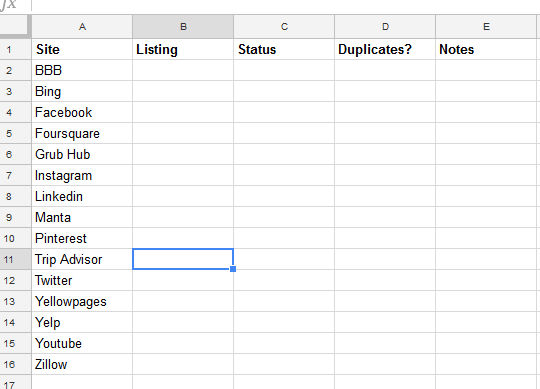
Search engines frown on duplicate listings because it makes it harder for them to decide which is the “true” version. To find duplicates, you should perform a NAP audit. Set up a spreadsheet like this:
Use search operators to quickly search for duplicates. For example, here’s what comes up when I search inurl:yelp “keyword performance”
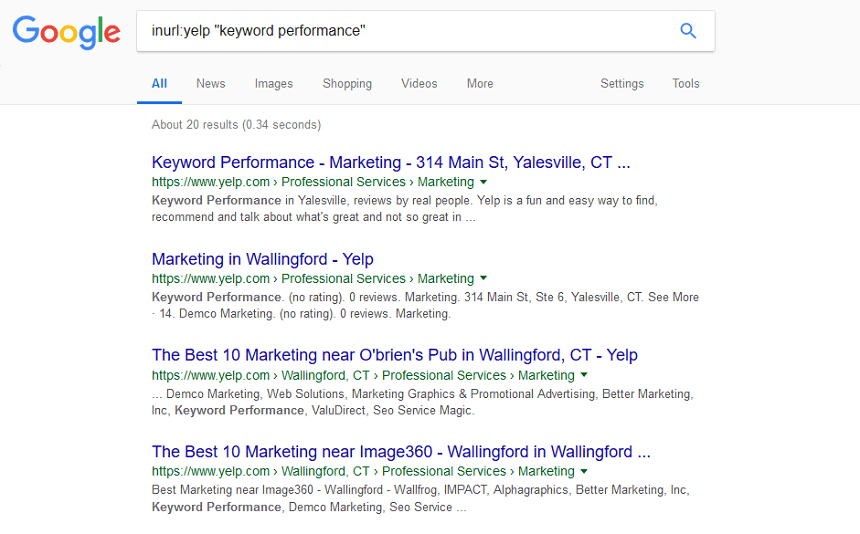
Using the “inurl” operator searches only that domain. Take our advice and pay close attention to Manta and Yellow Pages because duplicates pop up there all the time.
So, what do you do if you find a duplicate listing? Reach out to the webmaster and ask to have it removed. Even if you don’t get a response, some sites, like Google and Yellowpages, offer a “suggest an edit” feature that allows users to submit feedback.
3. On-Page SEO: Write Compelling Title Tags & Meta Descriptions
Titles will forever be the most important written element for customer acquisition. Walk down the check-out aisle in your local grocery store, and study those magazine covers. Forbes and Rolling Stone weren’t always industry giants. They developed clout by delivering quality content, and a lot of that success can be attributed to the enticing titles that they’ve crafted over the years.
Writing titles for the Internet isn’t much different; on the contrary, since you can actually use the search engines to help you, it can be easier. Use Google Suggest to conduct your keyword research and pay attention to the top results for your target queries. In addition to organic results, don’t rule out the winning PPC titles. An ad that receives more clicks will beat an ad that costs more.
In addition to Google Suggest, try the Keyword Magic Tool from Semrush (limited free use). The tool pulls all these “suggested” phrases, and even gives you some search volume to help you prioritize the words you should be using:
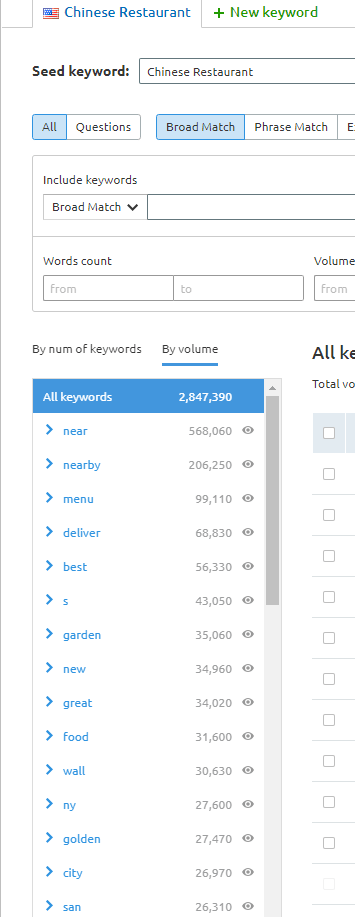
As you can see, words like “best,” “deliver,” and “great” are all heavily searched together with “Chinese restaurant,” so incorporating these into your titles and descriptions should help to improve click-through.
Brian Dean’s extensive copywriting guide is also worth a read. Like all great copywriters, Brian advocates the use of power words, like:
● Today
● Right now
● Fast
● Works quickly
● Step-by-step
● Easy
● Best
● Quick
● Definitive
● Simple
If you offer pizza delivery, then the word “fast” should be top of mind.
Avoid Lengthy Titles & Descriptions
If your title tag or meta description is too long, then search engines will truncate it with ellipses. To avoid this issue, preview your snippet with a free SERP preview tool or the preview built into your SEO plugin. It’s much easier to write when you can actually see what it will look like in the search results
4. Use Schema Markup
Schema essentially tells search engines what content actually means, rather than just what it says. Schema is not a direct ranking factor, but it helps search engines understand your pages and can make your listing eligible for richer search results, so why not include it?
A lot of people hit a wall with schema because they find writing code to be intimidating. Luckily, there are many great tools that generate the code for you. My favorite is Merkle’s Schema Markup Generator:
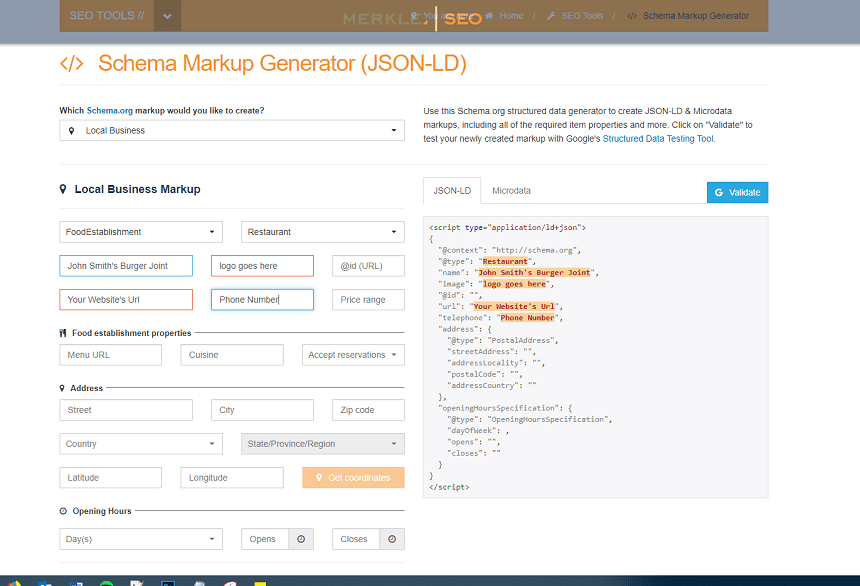
All you have to do here is select “local business” at the top.
Next, select “FoodEstablishment” and “Restaurant”
Fill in the fields, “validate it with Google’s Rich Results Test or the Schema Markup Validator, and you’re good to go!
To install, add the code to the <head> of your site. On WordPress, the safest way is an SEO plugin that supports local business schema or a header-and-footer snippet plugin. Avoid editing theme files such as header.php directly, because a theme update will overwrite your changes. After you publish, run your homepage through the Rich Results Test and confirm that LocalBusiness is detected.
If you have any SEO tips for restaurants, then feel free to leave a comment.
If you’re a restaurant owner in Connecticut, then drop us a line: we’re always eager to help businesses that are in our own backyard!